Tesla Robots Begin Self-Teaching in New Academy
Humanoid units at a Fremont facility are now generating their own training data to prepare for commercial delivery next year.
By Malcolm Davis ·
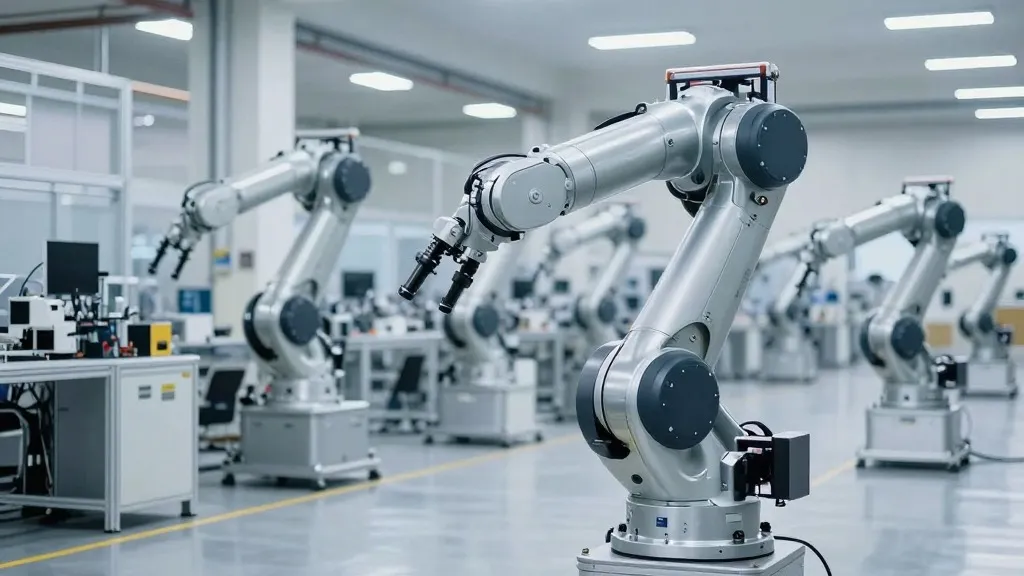
For consumers and businesses anticipating the arrival of humanoid labor, the path to deployment has shifted from theoretical planning to tangible industrial reality. Tesla has confirmed that its Optimus robots are now being manufactured on a high-volume line inside the Fremont factory, marking the first time the company has produced units that meet the standard for a commercial product. This transition signals that the era of prototype demos is ending, replaced by a manufacturing process designed to support a mass-market device.
The production line occupies the specific floor space previously used for Model S and Model X vehicles. Tesla cleared the old automotive assembly in just 46 days this spring to make room for robot production capacity sized for one million units annually. During a recent earnings call, CEO Elon Musk noted that most of the necessary equipment is already installed in Fremont. As the line ramps up, output is expected to climb toward roughly 20,000 robots per week, following what he described as a classic S-curve growth pattern with a shallow initial slope.
A critical challenge for the program is how the robots learn. Unlike Tesla’s cars, which benefit from data collected by millions of vehicles on the road, Optimus lacks an existing fleet to generate training information. To solve this, the company is establishing an Optimus Academy. In this environment, between 10,000 and 20,000 robots will practice a wide range of tasks. Every unit that leaves the Fremont line will contribute its operational data to improve the AI model, effectively allowing the robots to teach themselves.
Tesla plans to refine the robots' artificial intelligence, electromechanical design, reliability, and service life through the end of next year. Once these improvements are complete, the company intends to begin delivering Optimus units to outside companies. These early customers will likely deploy the robots for dangerous, repetitive, and around-the-clock jobs. Musk also indicated that a new video demonstrating AI-driven tasks, rather than preprogrammed motions, should be released within one or two months.
Hardware upgrades are also underway to support this trajectory. Tesla intends to integrate its AI5 chip into the Optimus platform next year. Meanwhile, the supply chain is solidifying its role in the program, with Tuopu, Joyson, and Sanhua certified as mass production partners for components in September. A larger dedicated facility is currently under construction at Giga Texas, with steel framing nearing completion. Musk has set a long-term target for that plant to produce 10 million robots per year.
Executives stated that production costs for Optimus are trending toward the expected manufacturing costs of the Cybercab, indicating the robot is engineered for volume from the outset. However, the design of the robot's hands remains the most difficult engineering challenge. Significant current effort is focused on solving this issue, a point Musk highlighted at a recent event, ensuring the limbs can perform the precise manipulations required for real-world utility.
Source: Teslarati